It's Time for an Upgrade
Updated: Jul 23
Special Edition · De Journal · The Dancing Economist · July
The official launch of my theory as The Dancing Economist. Today I put the whole thing on the table.......
I was six the first time I stepped onto a competitive dance floor. Thirty-eight years later I am still reading the room the same way. The music, the partner, the floor, the judges, the other couples, my own breath, the choreography, my smile, my partner.. Not one at a time. All of it, at once. That is where I learned complex thinking . On the dance floor.
And here is the thing I only understood later: The strongest thing my brain does is not a gift I was born with. It is something my body learnt Which means it is something anyone can learn.
where it starts
When you move you come back to now. The movement gives you a pause. And something else happens in that pause, something I did not expect an economist to care about so much.
Movement lifts creativity. In a set of Stanford experiments, people who walked, indoors on a treadmill or outside, produced far more creative ideas than when they sat, and the lift carried on even after they sat back down (Oppezzo and Schwartz, 2014). In one of those experiments, every single walker came up with more ideas than they had sitting still.
So the pause hands you back the moment, and the creativity fills it with options. Put those two together and you have the one thing this whole theory is built on. A real choice.
With a real choice you can catch a fast, primal reaction and decide differently, for the long term and not just for the thing in front of you. And you can build a life and a career that do not exist yet, when what is available does not excite you. That last part, I promise you, is the whole game.
then I looked up
Because this was never only personal. Whole economies got built on our fastest instincts. Hoard, grab, win the quarter. Economics runs on scarcity and on maximising the profit in front of us. That was a sensible answer back at the time.
But the world moved, the way we live and where we live changed, the present moved on and the model mostly did not. Good people have tried to change it, remember the circular economy, the work to measure progress beyond GDP, and I honour all of it, we need more ideas like this. My angle only differs in where it starts. It starts in the body.
Here is a thing I love, because I am an economist. The word economy is not really about money. It is Greek. Oikos, the household. And nemein, to tend it, to manage it. In my language, Hungarian, we say közgazdaság, the economy of the common, the thing we hold together. Somewhere we shrank a word about tending a home into a word about winning financially. I want to get back to its real meaning.
what I am proposing
I call it Kinenomics. The economics of movement. In Hungarian, a "mozgás gazdaságtana." Which is funny, because if you read the two words together and add only one letter it becomes "Mozgásgazdagságtan", which means rich in movement instead of the focus on rich in money. And I believe I do not have to explain the rest.
Kinenomics, how I call it in English, and Kinenomika in Hungarian, keeps that old root, nomos, and sets a new word in front of it, kinesis, movement. It puts movement at the centre and treats a healthier, more awake, more creative population not as a nice-to-have but as an economic input.
Make movement a baseline. Not a luxury for the people who can already afford it, a baseline for everyone, taught as movement-based intelligence in schools, workplaces and communities. Then the small, honest, per-person gains start to compound across a whole population.
More awareness. More ideas and more invention. Wider inclusion, because it is a floor everyone stands on, not a ladder only some can climb. Longer lives whose extra years carry cognition and mobility with them, not just time.
And people reaching for their own highest potential first, before we build enhancement into the body, keeping the choice, and the time to see what a new technology really does, in human hands.
then I looked sideways
Not up at the economy this time. Sideways, like that dancer on the floor , as dimensions matter, at everything else that is alive.
Adam Rutherford spent a whole book on this and the finding is humbling. Almost nothing we thought was ours alone is ours alone. Tools. Fire. Teaching. Culture. Sex that has nothing to do with making more of ourselves. Other animals do all of it. Our genome is about 98 per cent the same as a chimpanzee's. The difference, he says, is one of degree, not of kind (Rutherford, 2018).
There is a chimpanzee I keep thinking about. Her name was Julie, in a sanctuary in Zambia.
One day she put a blade of grass in her ear and left it there. It fed nobody. It signalled nothing. And her group copied her, and kept doing it after she died (van Leeuwen, Cronin and Haun, 2014).
A useless behaviour that outlived its inventor. That is culture. And it started with a body doing something new.
What we do differently is that we keep. Researchers call it the ratchet effect.
One generation improves the thing, the next generation starts from the improved thing and does not slip backwards (Tomasello, Kruger and Ratner, 1993).
Not smarter. Better at not losing what we found.
cognition has more than one shape
An octopus has around half a billion neurons and roughly two thirds of them are not in its head. They are in its arms (Godfrey-Smith, 2016). Each arm tastes, decides and acts, partly on its own.
There is an intelligence on this planet that solved the problem by putting the mind through the body. Not one correct shape of a brain. Several, invented separately.I hold that as an image, not as proof. But it is the image I have been living since I was six.
And then the number that stops me every time.
Humans and our livestock are now about 96 per cent of the mass of every mammal on Earth. Everything wild, the elephants, the whales, the wolves, all of it together, is around 4 per cent (Bar-On, Phillips and Milo, 2018).
We did not win the argument about who is more sophisticated. We took the room. So coexistence is not a soft word in my economics. Oikos means the household. The household was always bigger than the house.
what comes next, and what comes first
Humanoids. Hybrids. Enhancement built into the body. That is next, and I am not against it.But look at what machines still find hard.
Hans Moravec noticed it in 1988. It is comparatively easy to make a computer perform at adult level on tests and chess, and very difficult to give it the skills of a one year old for perception and movement (Moravec, 1988).
Reasoning arrived late in us and it sits thin on top. The body came first and it runs deep.
So the order matters. The machines are taking the thin layer first and the deep one last. The deep one is the human baseline. And most of us have never trained it.
That is why the body goes first. Use it, and it hands you the pause. The pause hands you the choice. The choice is the only mind that is actually yours. Then, when the humanoids arrive, and they will, we meet them with something we developed rather than something we skipped.

one honest thing
I am not going to tell you movement turns you into a genius. The researchers behind that walking study said it plainly, they were not claiming it makes you Michelangelo. The individual effects are real but modest. The power of this is not the single dose. It is the baseline, and the scale. That is the whole bet, and I would rather state it honestly than sell you a miracle.
what I am publishing today
The official theory, as a white paper. Kinenomics. The assumptions it rests on, the research behind each part, and the open questions I left in on purpose, because a theory that cannot fail cannot really be trusted either.
And one honest thing about that research. I went looking for the closest supporting facts I could find. There may be closer ones. There may be better ones. If you know them, please reach out and send them my way. And when I find the right partners and the right room, I am ready to run the research myself.
So the question I want to leave you with is not who is choosing for you. It is this.
When did you last build something that did not exist yet?
Read the white paper HERE:
Logging off, with a warm embrace 💃
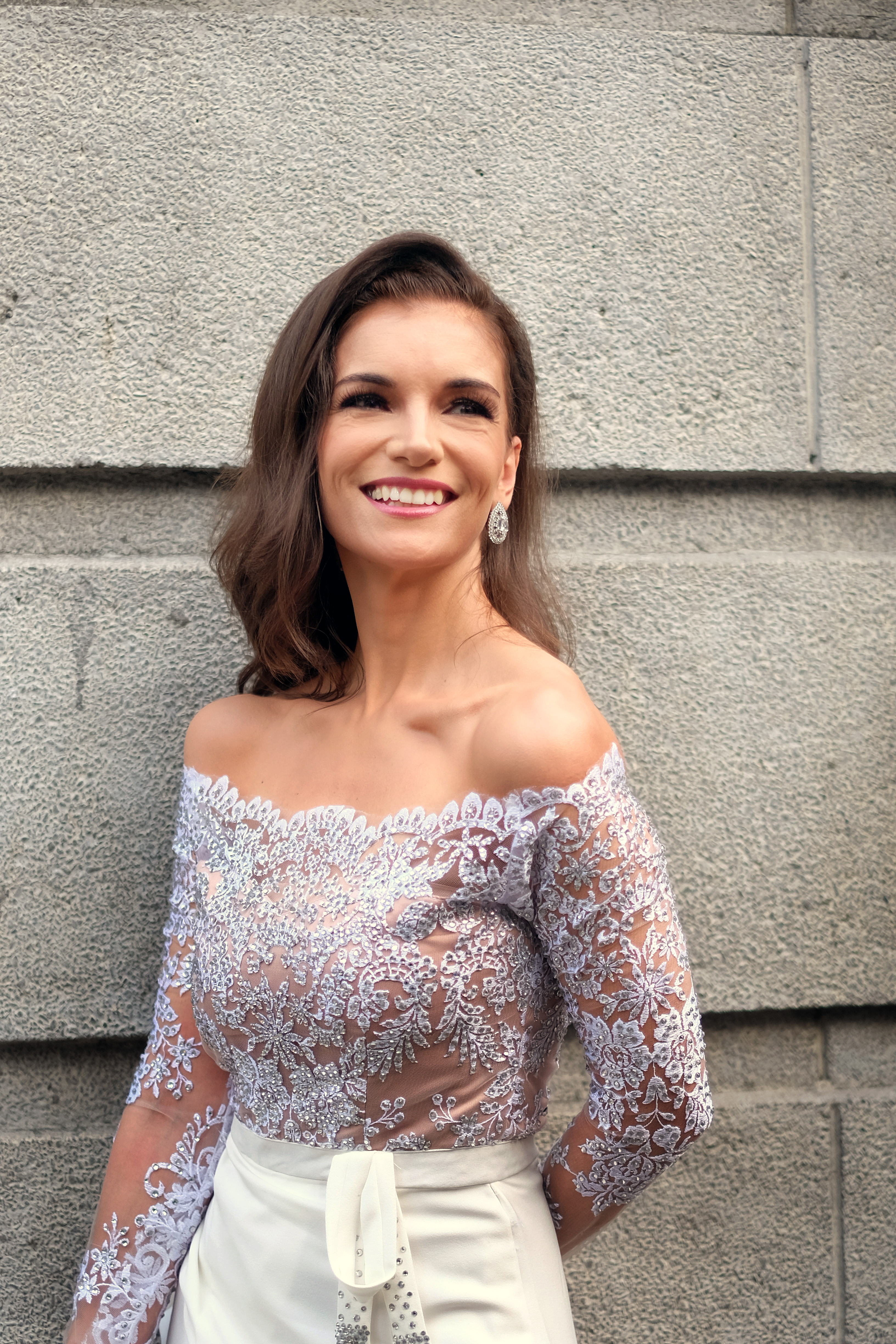
Andrea The only Dancing Economist in the world. Dare to dance your way in life and business.
P.S. Just once this week, before the next thing you decide, stand up and move for two minutes first. Then decide. Notice whether the choice feels a little more like yours. That small gap is the whole thing. It always starts there.
Next edition: The Frame-Strong Core, Big Picture

the book, this august
If this gave you the shape of the idea, the book gives you all of it. Dare to Dance Your Way in Life and Business arrives August 29, 2026, as a digital and audiobook read in my own voice, and the printed book is here in March 2027.
The audiobook goes where a short piece cannot. The full theory, explained slowly. The methodology, laid out step by step so you can actually use it. And the real story of the process, how I first found this in myself on the dance floor and off it, and how it started to click for other people too, the individuals, the organisations, and the couples who told me they felt it work.
If you want to know the moment it opens, write to andrea@dancingeconomist.com and you will be first through the door.
Copyright and theory ownership
Kinenomics, the economics of movement, and Movement Based Intelligence are original concepts by Andrea, The Dancing Economist. The Hungarian versions, Mozgásgazdagságtan and Kinenomika, too. This newsletter, the theory it describes, and the published white paper are all copyrighted © 2026 Andrea Zsapka. All rights reserved.
You are welcome to share it in full and unaltered, with attribution. Please do not adapt, excerpt, or republish it for commercial use without written permission. But feel free to reach out if you have supporting research. +6582941767
sources
Oppezzo, M. and Schwartz, D.L. (2014) 'Give your ideas some legs: The positive effect of walking on creative thinking', Journal of Experimental Psychology: Learning, Memory, and Cognition, 40(4), 1142-1152. https://doi.org/10.1037/a0036577
Rutherford, A. (2018) The Book of Humans: A Brief History of Culture, Sex, War and the Evolution of Us. Weidenfeld & Nicolson. https://www.penguin.co.uk/books/307947/the-book-of-humans-by-rutherford-adam/9781780229041
van Leeuwen, E.J.C., Cronin, K.A. and Haun, D.B.M. (2014) 'A group-specific arbitrary tradition in chimpanzees (Pan troglodytes)', Animal Cognition, 17(6), 1421-1425. https://doi.org/10.1007/s10071-014-0766-8
Tomasello, M., Kruger, A.C. and Ratner, H.H. (1993) 'Cultural learning', Behavioral and Brain Sciences, 16(3), 495-511. See also Tennie, C., Call, J. and Tomasello, M. (2009) 'Ratcheting up the ratchet: on the evolution of cumulative culture', Philosophical Transactions of the Royal Society B, 364(1528), 2405-2415. https://doi.org/10.1098/rstb.2009.0052
Godfrey-Smith, P. (2016) Other Minds: The Octopus, the Sea, and the Deep Origins of Consciousness. Farrar, Straus and Giroux. Underlying neuroanatomy: Hochner, B., Shomrat, T. and Fiorito, G. (2006) 'The octopus: a model for a comparative analysis of the evolution of learning and memory mechanisms', The Biological Bulletin, 210(3), 308-317. https://doi.org/10.2307/4134567
Bar-On, Y.M., Phillips, R. and Milo, R. (2018) 'The biomass distribution on Earth', PNAS, 115(25), 6506-6511. https://doi.org/10.1073/pnas.1711842115
Moravec, H. (1988) Mind Children: The Future of Robot and Human Intelligence. Harvard University Press.


Comments