It’s Time for an Upgrade - Reclaiming the Automatic
Movement-Based Intelligence and the Case for Kinenomics, The Economics of Movement

A Thesis White Paper
Author: Andrea Zsapka, writing as The Dancing Economist
Publication: De Journal, 2026
Status: Working thesis, open for contribution
Version: 2.0, expanded with comparative cognition, the affective threshold, and complex movement evidence
© 2026 Andrea Zsapka. All rights reserved. Published under the name “The Dancing Economist.” This paper may be shared in full and unaltered with attribution. It may not be reproduced in part, adapted, or republished for commercial use without the author’s written permission.
Abstract
I am the Dancing Economist, and this paper puts a theory of mine on the table, together with the existing research I could find to stand behind each part of it. My claim is simple. It is time for an upgrade. Many of our systems are stuck in patterns that no longer fit a changed world, and the reason they resist change is that the theory of economics itself was built on scarcity and on our fastest instinct, to maximize the profit in front of us. That is not the only model, and not obviously the sustainable one. The circular economy and the work to measure progress beyond GDP already point elsewhere. Even the word itself shows us there is more: economy comes from the Greek for the tending of a household, and in Hungarian it is the economy of the common, the thing we hold together.
My proposal is "Kinenomics", "The Economics of Movement", in Hungarian "Mozgásgazdagságtan", "A Mozgás Gadasagtana", "Kinenomika". It places movement at the center, because a healthier, more active, more aware and more creative population is not a nice-to-have, it is an economic input. Movement brings us back to the now, awareness gives us the pause, and the pause is where a person can catch a primal, animal-based reaction and choose differently, for the long term rather than for the checkout in front of them. The research I lean on is real, and I state its limits honestly: movement measurably lifts creative thinking, exercise strengthens the brake called inhibitory control, physical inactivity is already a multi-billion-dollar drag on the world economy, and the drive to leave something better for the next generation is a documented human instinct, not a slogan.
This version of the paper adds four things. First, a comparative baseline: almost nothing in our cognitive repertoire is unique in kind, and what is distinctive is our capacity to retain improvements across generations. Second, the honest correction of a popular claim about why movement sustains itself, which turns out to matter a great deal for how a baseline should be designed. Third, the evidence that complex, novel, socially embedded movement affects the brain differently from repetitive exercise. Fourth, the observation that sensorimotor capability is the last human capacity machines are approaching, which sharpens the sequencing argument in Section 4.6.
Taught in schools, workplaces, and communities as movement-based intelligence, this points toward a population where not only life expectancy rises but cognition and mobility rise with it, where more ideas and more inventions follow, and where we reach for our own highest potential before we build enhancement into the body, keeping the choice, and the time to see what a new technology really does, in human hands. We do not push the brake on progress. Instead we are making progress consciously, on the understanding that less, chosen on purpose, tends to produce more for everyone, even for those who love money most. I have not proven this chain, and I say so plainly. What I have done is gather the closest supporting research I could find, connect it, and mark the places it could be wrong. I am ready to run the original research myself, given the right partners and the right room, and I invite movement scientists, economists, behavioral researchers, and serious skeptics to test it, challenge it, contribute to it.
Why I wrote this, a personal note
The formal argument starts in the next section.
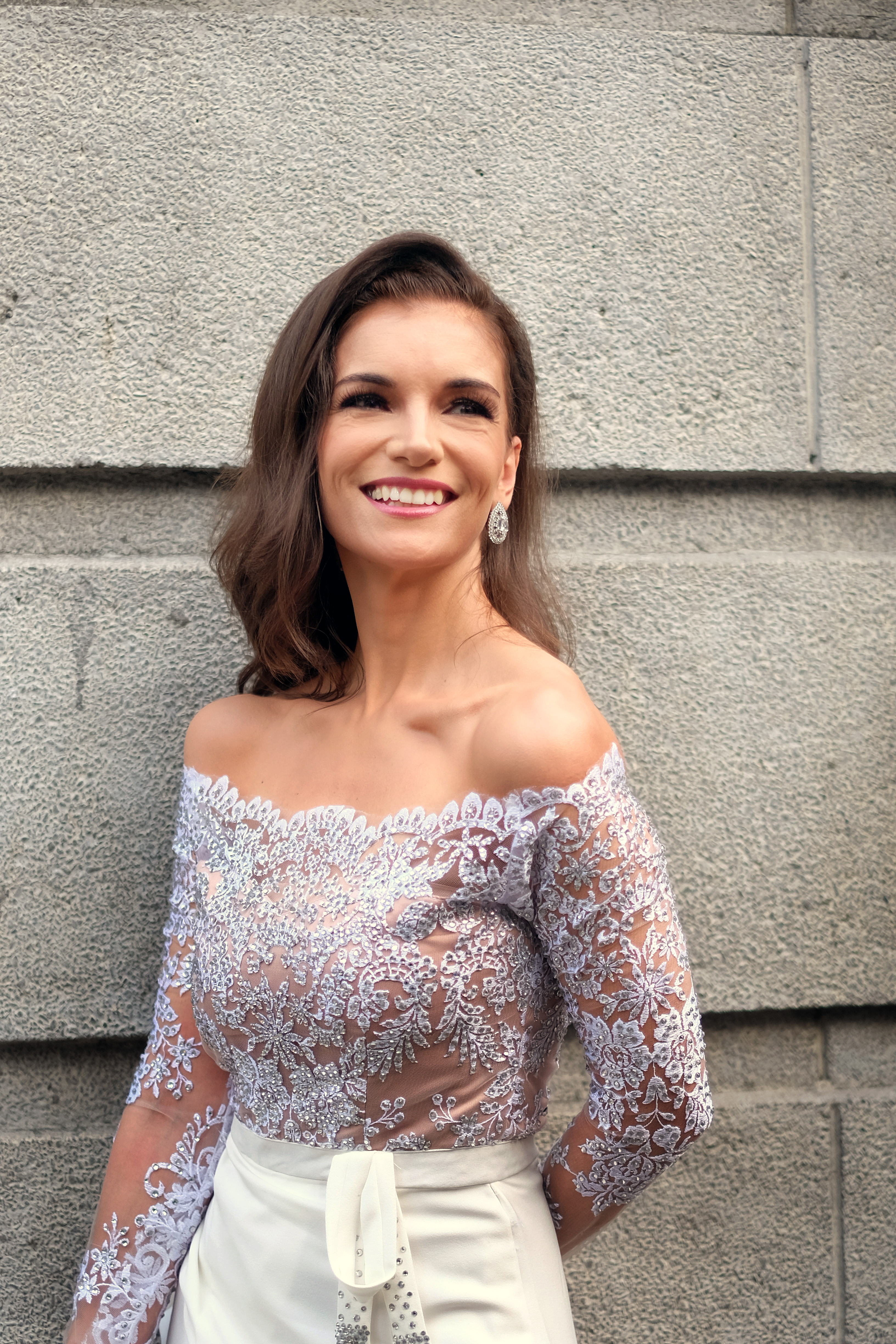
This page is me: The Dancing Economist
I was six when I first stepped onto a dance floor. Thirty-eight years later, I am still reading the same room. The judges. The other couples. The music. The style I am dancing. What I know. What I never saw coming. All of it. At the same time.
That is where my brain learned to think. Not in the economics classes. On the dance floor. So here is what I want to say before the citations begin. The research in this paper belongs to the researchers named in it. What I did was search, and as Tony Robbins would say, putting together what exists in a different upgraded way. I looked for the closest supporting facts and research materials I could find, and I connected them. There may be closer ones. There may be more accurate ones. If you know them, I want them. This is how my Dancing Economist brain works: it finds things that already exist, connects them, and upgrades them., just like Tony Robbins said, find the patters and upgrade them with your own essence. The recognition of the pattern is my purpose. And I am ready to take the next step, to run the appropriate research itself, when I find the right partners and the right environment to do it properly.
Companies use proven techniques to reach the automatic mind, and it works. But a tool that can pull people into sleepwalking can be reversed to wake them up. Movement brings us back to the now. Awareness gives us the pause. The pause gives us the choice. And a person with a real choice can build a life and a career path that does not exist yet, when what is available does not excite them. More about this will be shared in my upcoming book in August, “THE DANCING ECONOMIST - Dare to Dance Your Way in Life and Business: How to create a brand new Life and Career Path when what exists does not excite you.”
Then I looked up from the person to the system.
Our economics were built on our fastest instincts. Hoard. Grab. Win the quarter. But we carry older, quieter instincts too. Care. Trust. We all have the wish to leave something behind that gives back hope. I am not against the animal in us. I am asking it to think in generations, not in checkouts. Use our differentiating skill sophistication to create an "Upward Moving Cycle" for humanity.
And then I looked sideways,
At everything else that is alive, because a theory about the animal in us should be able to say what the animal actually is. It turned out to be humbling. Almost nothing I thought was ours alone is ours alone.
Here is a thing I love, because I am an economist. The word economy is not really about money. It is Greek. Oikos, the household. Nomos, the way you tend it. Economics was the care of a home. In my language, Hungarian, we say közgazdaság, the economy of the common, the thing we hold together. It is the same old root that gives us ecology. Somewhere we shrank a word about tending a household into a word about winning a quarter. I want to go back to the roots..
So Kinenomics keeps that old root, nomos, and sets a new word in front of it. Kinesis. Movement. The Economics of Movement. And here is my daring claim. It is time for an upgrade. Not a revolution. An upgrade. Our systems were sensible answers to their own momentums, built on scarcity and the drive to maximize, and the world moved on while they mostly did not. Good people have tried to change this, remember the circular economy, the work to measure progress beyond money, and I honour all of it. My angle only differs in where it starts. It starts in the body. A healthier, more awake, more creative population, choosing on a longer horizon, daring to be active curious explorers again, is not a soft wish. It is an economic input. And less, chosen on purpose, tends to make more, for everyone, even the ones who love money.
And there is a clock on this. Enhancement is moving from our hands toward our heads. I believe we have not reached our own ceiling yet. I would rather find out what this brain and this body can do first, and let any upgrade be a choice made from a higher floor.
I am not judging any existing system. I am not saying who is right or wrong. Curiosity is what drives me. That is the whole engine.
So before you read the formal version, one question, and it is for you. When was the last time you caught yourself choosing, instead of being chosen for?
With warm embrace, The Dancing Economist
1. Introduction
Most of the economy that touches daily attention is built to profit from reactions rather than reasoning. A real part of human decision-making runs on fast, automatic processes, and those processes can be aimed by whoever pays for attention. The common responses to this fact are resignation, treating it as fixed human nature, or a wellness narrative that promises freedom through raised consciousness. This paper argues that both are weak alone, and that the useful ground lies between them.
The theory has three moves. First, the popular account of the subconscious being programmed is largely unsupported, while a narrower and better-evidenced mechanism holds in its place. Second, there is a trainable route back to conscious choice that runs through the body, supported by modest but real evidence. Third, if that route is real, it carries economic weight, and it points toward an economics that invests in human agency and measures success by what a generation passes on rather than by what it consumes.
This document introduces that theory formally. It is a working thesis. It does not claim to have proven its central chain, and it names the places where it could be wrong. Its purpose is to make the argument clear enough, and honest enough about its own limits, that can be improved.
A word on framing. The dominant model treats economics as the management of scarcity and the maximization of return, a sensible response to the conditions in which it was formed. Those conditions have shifted, and serious alternatives already exist, among them like the circular economy, which redesigns production so that materials stay in use and nature is regenerated rather than depleted (Ellen MacArthur Foundation), and the movement to measure progress beyond GDP (Stiglitz, Sen and Fitoussi, 2009). This paper does not compete with them. It adds a premise they tend to leave implicit, that the capacity of a population to choose consciously and to act on a long horizon is itself an economic input, and that this capacity is trainable through the body. It is offered as an upgrade, not a rejection.
2. The assumptions this theory rests on
A theory is only as sound as its premises, so the premises are stated openly. Each is followed by its current evidential standing.
1. Automatic influence amplifies, it does not implant. External actors can aim automatic processing, but the effect rides on a want the person already has rather than installing a new one. Well supported for the specific case of subliminal and priming effects; the stronger “covert programming” version is not supported.
2. Feeling aware is not the same as being aware. Self-perceived awareness and objective accuracy can move independently. Well supported.
3. Intuition is conditional. A gut judgment is trustworthy only in a predictable, feedback-rich environment where its patterns can be learned, and subjective confidence is not a reliable indicator of accuracy. Well supported.
4. Movement trains the relevant faculties. Sustained movement improves interoception and inhibitory control. Supported, with the honest qualification that the effects are modest in healthy adults and depend on dose.
5. The automatic system is not the enemy. It is largely efficient and correct; the problem is its exploitation, not its existence. Consistent with dual-process research.
6. Care, cooperation, and legacy are instincts too. The “higher” drives this theory builds on are not reason set against instinct; they are a different set of evolved instincts. Supported by the generativity literature and cooperation research.
7. Knowledge is now abundant; embodied capability is scarce. In an information-saturated environment, the developable human asset is a trained body and a self-aware brain. An interpretive premise, supported in part by evidence on cognitive offloading.
8. Health is cost-effective, not necessarily cost-saving. Making people healthier creates real economic value through productivity and functional years, but does not straightforwardly reduce net lifetime healthcare spending. Well supported and frequently misunderstood.
9. The value of trained human agency rises as automation expands. As machines absorb more decisions, the capacity to choose when to delegate and when to retain control becomes scarcer and more valuable. A forward-looking premise, argued rather than proven.
10. Human cognition differs from other animals in degree and complexity, not in kind. Tool use, fire use, teaching, culture, and non-reproductive sex are all documented outside our species. What is distinctive is the retention of improvements across generations. Well supported.
11. Cognition does not require a centralised brain. At least one lineage solved the problem by distributing most of its nervous system through the body. Well supported as comparative anatomy. Its application to human embodied cognition is analogical, and this paper holds it as an image rather than as evidence.
12. Sensorimotor capability is the hardest human capability to reverse-engineer, and therefore the last to be automated. Argued consistently since the 1980s, and contested as a predictive law rather than as a description of research priorities.
13. Whether movement is sustained is determined by how it feels during the activity, not after it. Well supported, and directly contrary to the common motivational framing that a person should push through discomfort and wait for a reward. This premise has significant design consequences and they are set out in Section 4.7.
3. The existing research the theory draws on
This section gathers the existing research I lean on to support the theory, claim by claim. It is a synthesis, not a systematic review, and it is deliberately concise.
3.1 The limits of subconscious programming.
The dramatic claim that hidden cues install new behavior is the least supported. The cinema experiment that popularized it was a hoax that was never replicated, and the wider social-priming literature became central to psychology’s replication crisis (Doyen et al., 2012; Karremans et al., 2006). What survives is narrower: automatic cues can shift a choice only when they match a pre-existing goal, and not for already-habitual behavior (Karremans et al., 2006; Verwijmeren et al., 2011).
3.2 Interoception and the trainable body.
Interoception, the sensing of internal states, is separable into objective accuracy, subjective sensibility, and metacognitive awareness, and these do not necessarily align (Garfinkel et al., 2015). The most-used self-report instrument measures sensibility, not accuracy (Mehling et al., 2018), while objective tasks such as heartbeat perception have their own limits (Schandry, 1981). Sustained aerobic training has been shown to improve interoception alongside reductions in anxiety and low mood (RCT, Psychology of Sport and Exercise, 2025).
3.3 Inhibitory control and movement.
Exercise improves inhibitory control, the capacity to stop an automatic response, though the effect in healthy adults is small and dose-dependent. A meta-analysis of 42 randomized trials found an effect of roughly 0.23 for inhibitory control (International Journal of Nursing Studies, 2024), and evidence in sedentary people indicates that executive-function gains require sustained sessions of meaningful length (systematic review, 2023).
3.4 The conditions for intuition.
Expert intuition is reliable only in high-validity environments with adequate opportunity to learn through feedback, and subjective confidence does not track accuracy (Kahneman & Klein, 2009). This is why intuition can be trusted on a dance floor and distrusted in front of an advertisement.
3.5 The ethical use of persuasion.
The same behavioral tools used to keep people reactive can be pointed the other way. Boosting builds a person’s own competence and requires their awareness and motivation, in contrast to nudges that steer without either (Hertwig & Grüne-Yanoff, 2017). Behavioral tactics drawn from marketing have been shown, in a large randomized trial, to increase physical activity (BE ACTIVE, Fanaroff, Volpp et al., 2024), and the broader logic of choice architecture and social norms is well established (Thaler & Sunstein, 2008; Cialdini, 2006).
3.6 Creating paths under uncertainty.
Building something with no precedent is a low-validity environment where prediction fails. Expert entrepreneurs proceed instead by starting from available means, committing only what they can afford to lose, and treating surprises as material (Sarasvathy, 2001).
3.7 Human potential and legacy.
The drive to leave a positive legacy and guide the next generation is a documented developmental construct, generativity (Erikson, 1963; McAdams & de St. Aubin, 1993). Maslow himself, in his later work, placed self-transcendence, a purpose beyond the self, above self-actualization; the familiar pyramid was a later simplification, and the strict hierarchy has real empirical weaknesses (Maslow, 1969; Koltko-Rivera, 2006).
3.8 The economics of higher aims.
A live tradition already argues that economies should aim beyond output: the capability approach defines wellbeing as the real freedom to lead a valued life (Sen, 1999), a formal case was made for measuring progress beyond GDP (Stiglitz, Sen & Fitoussi, 2009), and the beyond-GDP agenda now reaches into international policy. How much to value future generations is an old economic question about the social discount rate, contested since Ramsey (1928) and argued by Stern and others toward protecting the future.
3.9 The body as an economic variable.
Physical inactivity was estimated to cost the world economy about 67.5 billion international dollars in a single year, much of it in lost productivity, with far larger sums projected (Ding et al., 2016; Santos et al., 2022). But careful modeling shows that preventing disease does not straightforwardly save net lifetime healthcare cost, because people who live longer accumulate cost in added years; prevention is cost-effective rather than cost-saving (van Baal et al., 2008).
3.10 Healthspan and aging.
Living longer is not the same as living well; disability-free years and disabled years are distinct quantities. Movement is a direct lever on the gap. A large randomized trial in sedentary older adults cut major mobility disability by 18 percent (LIFE Study), the practical form of what Fries called the compression of morbidity, squeezing frailty into a shorter window near the end of life (Fries, 1980).
3.11 Technology, offloading, and agency.
Handing a capacity to a tool can weaken the underlying capacity: expecting information to be available online reduced memory for it (Sparrow et al., 2011), and habitual GPS use predicted worse unaided spatial memory (Dahmani & Bohbot, 2020), part of the broader phenomenon of cognitive offloading (Risko & Gilbert, 2016). Whether technology augments or replaces human capability is a social and economic choice, not a fate (Acemoglu & Johnson, 2023).
3.12 The comparative baseline: what is, and is not, uniquely ours
A theory that asks the animal in us to think in generations owes the reader an accurate account of what that animal is. The synthesis is humbling. Tool use, fire use, teaching, culture, and sexual behaviour unrelated to reproduction are all documented outside our species, and our genome is approximately 98 per cent identical to a chimpanzee’s; the difference is one of degree and complexity rather than of kind (Rutherford, 2018).
At the Chimfunshi Wildlife Orphanage Trust in Zambia, a female chimpanzee named Julie began inserting a blade of grass into her ear. The behaviour had no instrumental function and communicated nothing. Members of her group copied it, and it persisted after her death (van Leeuwen, Cronin & Haun, 2014). A later study documented its recurrence and the emergence of a variant in a separate group at the same sanctuary (van Leeuwen et al., 2025). This is culture in its purest form: a body doing something new in front of others, and the doing being kept because of the relationship, not because of the payoff.
What our species adds is retention. Human cultural transmission is characterised by the ratchet effect, in which improvements are held with relatively little backward slippage until a further improvement arrives, a process that depends on faithful, process-oriented copying and on active teaching (Tomasello, Kruger & Ratner, 1993; Tennie, Call & Tomasello, 2009).
Relevance to this theory. The substrate that produces culture is a body doing something new, observed by others, and then taught. Kinenomics treats that substrate as trainable, as currently untrained at population scale, and as economically consequential. It does not claim that movement-based intelligence is uniquely human. The opposite framing is stronger: it is the shared foundation that we, alone among animals, have built systems that allow us to stop using.
3.13 Cognitive architecture is not singular
Octopus vulgaris has roughly half a billion neurons, of which approximately two thirds sit not in the central brain but in the arms, giving a nervous system that is far more distributed and less centrally integrated than a vertebrate system of comparable size (Hochner, Shomrat & Fiorito, 2006; Godfrey-Smith, 2016). This architecture evolved independently of the vertebrate line, which makes it an existence proof rather than a variation: centralised cognition is one solution among several.
This is comparative anatomy in a mollusc. It demonstrates nothing about human cognition and it does not support the claim that human thinking improves with movement. That claim rests on Sections 3.2, 3.3, and 3.17 and on Oppezzo and Schwartz (2014).
The octopus is retained here because it removes an unstated assumption, namely that thinking is something the head does and the body carries. It is held as an image, and any reader who wishes to strike it from the argument may do so without weakening any other section.
3.14 Coexistence as a measurable economic fact
A census of global biomass found that humans account for approximately 36 per cent and livestock approximately 60 per cent of the mass of all mammals, leaving wild mammals at roughly 4 per cent, while humans represent about 0.01 per cent of total biomass on Earth (Bar-On, Phillips & Milo, 2018).
This figure does not by itself argue for any policy, and this paper draws no environmental conclusion from it. It is included because it gives the word oikos a measurable boundary. The household this economics proposes to tend is, in mammalian terms, already an almost entirely managed one. Coexistence is therefore not a moral flourish attached to the theory. It is a description of the accounting entity.
3.15 The automation frontier runs through the body
The capabilities we experience as effortless are the ones machines have found hardest to reproduce. Moravec observed that adult-level performance on intelligence tests or chess is comparatively easy to engineer, while the perceptual and mobility skills of a one-year-old are difficult or impossible, and proposed that this is because sensorimotor competence was refined across a far longer evolutionary window than abstract reasoning (Moravec, 1988).
The claim is contested. Narayanan (2026) argues that the paradox describes what the artificial intelligence field chose to prioritise rather than a predictive law about what is intrinsically hard. This paper does not need the strong version. Under the weaker reading the relevant point survives, and it is Minsky’s: we are least aware of what our minds do best, which means these are the capacities we are least likely to notice losing. Section 4.6 depends on that, not on any forecast about robotics.
3.16 The affective threshold: why the first minutes decide, and why the popular account is wrong
A common motivational framing holds that a person should push through the initial discomfort of exercise, after which endorphins arrive and the desire to continue follows. Two parts of that framing do not survive contact with the evidence, and correcting them changes how a movement baseline should be designed.
The mechanism. The endorphin account was widely propagated but poorly supported. Beta-endorphin is hydrophilic and does not readily cross the blood-brain barrier, so peripheral opioid levels are unlikely to produce central effects. Anandamide, a lipophilic endocannabinoid that also rises during sustained aerobic exercise, does cross it.
Using pharmacological, molecular genetic, and behavioural methods in mice, Fuss and colleagues showed that the post-running reduction in anxiety and pain depended on cannabinoid receptors and not on opioid receptors (Fuss et al., 2015). A subsequent review sets out both the evidence and the substantial open questions, and human evidence remains largely indirect (Siebers, Biedermann & Fuss, 2023).
The behaviour, which matters more.
A systematic review of twenty-four studies found that a positive change in affect during moderate-intensity exercise predicted future physical activity, while post-exercise affect had a null relationship with it (Rhodes & Kates, 2015). The Dual-Mode Theory explains the pattern: below the ventilatory or lactate threshold, affective responses are relatively homogeneous across individuals and mainly positive, and above it, pleasure declines and individual variation widens (Ekkekakis, 2003, 2009).
The implication runs directly against the popular framing, and it is the single most consequential finding added to this paper. A baseline designed to be endured will not scale. Feeling good afterwards does not predict returning. Feeling good while doing it does. That is an argument for a baseline layer built from moderate-intensity, musical, partnered, socially embedded movement rather than from prescribed high-intensity protocols, and it explains a pattern this author observed for thirty-eight years without being able to name it: people who are taught to dance tend to keep dancing, and people who are told to exercise mostly do not.
3.17 Complex, novel movement: the evidence that dance is not simply exercise
Two findings suggest that what the brain responds to is novelty and complexity rather than exertion alone.
In a prospective cohort of 469 community-dwelling adults over 75, followed for a median of 5.1 years, dancing was among the leisure activities associated with reduced dementia risk. The result worth attention is the contrast within the same study: a one-point increment in the cognitive-activity score was significantly associated with reduced risk (hazard ratio 0.93, 95 per cent CI 0.90 to 0.97), while a one-point increment in the physical-activity score was not (hazard ratio 1.00) (Verghese et al., 2003). Dancing was the physical activity in that cohort that behaved like a cognitive one. The study is observational, frequent dancers were a subgroup, and the authors themselves called for controlled trials. It should be cited as suggestive and not as proof.
The controlled evidence points the same way. In an 18-month randomised trial, healthy seniors averaging 68 years were assigned either to a dance programme or to conventional endurance and flexibility training. The dance arm changed steps, arm patterns, formations, speed, and rhythms every two weeks specifically to keep participants in continuous learning. Both interventions produced hippocampal volume increases; only the dance group improved in balance (Rehfeld et al., 2017).
The companion analysis frames the mechanism explicitly: in animal research, physical activity combined with sensory enrichment produces stronger and longer-lasting brain effects than either alone, and dance is proposed as the human analogue of that combination (Müller et al., 2017). Sample sizes were small, with 22 completers, so the results are directional rather than settled.
Relevance to this theory. This is the evidential core of what the author has been describing informally as moving many parts of the brain at once. The active ingredient appears to be the requirement to learn, coordinate, and adapt while moving, in company, to an external rhythm. That is a design specification, and it is set out in Section 4.7.
3.18 Flow, and one claim this paper will not use
Flow is characterised by a set of conditions including a balance between challenge and skill, clear goals, unambiguous and immediate feedback, a sense of control, altered time perception, and an autotelic, self-rewarding quality (Csikszentmihalyi, 1990).
A meta-analysis of 28 studies found challenge-skill balance to be a robust contributor to flow alongside clear goals and sense of control, with weaker correlations in work and education contexts than elsewhere (Fong, Zaleski & Leach, 2015). Work-related flow has been meta-analytically associated with job performance and wellbeing (Antecedents and outcomes of work-related flow, 2023).
A claim this paper excludes.
The widely circulated statement that a ten-year McKinsey study found top executives to be 500 per cent more productive in flow appears throughout business writing and has no traceable primary source; it propagates through secondary commentary rather than any published study. Consistent with the sourcing standard stated at the end of this paper, it is excluded, and readers are advised against using it.
Relevance to this theory. A partnered dance floor satisfies the flow antecedents structurally rather than incidentally. The difficulty of the figure can be matched to the dancer’s skill, the goal is the next beat and is unambiguous, feedback arrives continuously through the partner, the music, and the floor, and control is real rather than nominal. Kinenomics proposes that this is a transferable design pattern for environments outside dance, and Section 4.8 sets out how.
3.19 De-automating a trained skill: the backward step
Backward walking is a non-automatic motor skill that demands greater attention, cognitive resource, and postural control than forward walking, which is why backward gait velocity functions as a sensitive predictor of fall risk in clinical populations (see, for example, the multiple sclerosis literature, PMC10438976).
Argentine tango is built on it. The follower’s default direction of travel is backward, and researchers studying tango in Parkinson’s disease have identified this as one reason the form may be therapeutically distinctive, alongside dynamic balance, turning, movement initiation, and variable speed. Trials show improvements in balance and functional mobility relative to control and comparable or better than other partnered dance forms, with tango and waltz groups both improving significantly on the Berg Balance Scale, six-minute walk distance, and backward stride length (Hackney & Earhart, 2009; Duncan & Earhart, 2012).
A meta-analysis of thirteen studies found significant overall effects favouring tango for motor severity, balance, and timed gait, while effects on freezing of gait were not significant (Lötzke, Ostermann & Büssing, 2015). Blinding limitations across this literature are real and are acknowledged in the reviews themselves.
Separately and more tentatively, six experiments reported that backward motion, whether physically walked, induced through optic flow, or merely imagined, improved recall of staged events, word lists, and pictures, an effect the authors named the mnemonic time-travel effect (Aksentijevic, Brandt, Tsakanikos & Thorpe, 2019). Independent commentators have said the finding requires clear replication before confidence is warranted. It is included here as a lead worth pursuing and explicitly not as support for any claim in this paper.
Relevance to this theory. The backward step is the clearest physical instance of the mechanism this whole theory rests on. Walking is a movement the body has fully automated. Reversing it removes the automation and forces attention back into a process that had been running without it. That is the pause, performed with the legs, and it is why the tango floor is where the author first encountered the thing this paper is trying to describe.
4. The theory
4.1 Routing.
Every decision can be pulled out of the exploited-automatic lane and directed into one of three destinations: back into a well-trained automatic response through pre-loaded if-then plans, into deliberate attention when the choice warrants it, or, for building something new, into structured experimentation rather than prediction. Movement is the instrument that makes the sorting possible, by widening the gap between impulse and action.
4.2 Movement-based intelligence.
This is the body used as a decision instrument in three ways at once: it sharpens the read on one’s own state and values, it trains the brake that opens a gap for conscious choice, and it is itself the repeatable practice that builds the automatic responses a person actually wants. It is not a claim of mystical higher cognition, and following Section 3.12 it is not a claim of human uniqueness either. It is a better router, with the body as its training substrate, and an honest ceiling on what movement alone can buy.
4.3 Turning the tools around.
The behavioral science that keeps people reactive is a neutral toolkit that can be aimed at waking them into activity, skill, and creation. The governing rule is transparency: any tactic that only works while the person is kept unaware of it belongs to the economy this theory seeks to leave. The preference is therefore for competence-building boosts over covert nudges.
4.4 Kinenomics, the economics of movement.
The proposed framework maximizes human potential measured across generations rather than within a lifetime. Its unit of success is the potential, capability, and hope a generation passes on. It does not deny animal instinct or Maslow’s hierarchy; it builds on the cooperative and generative instincts and on Maslow’s own later self-transcendence.
In economic terms it applies a low discount rate to human potential, and it treats the depletion of a generation’s capacity for conscious, cooperative, long-sighted action as a cost, even when that depletion registers as growth. The market failure it names is specific: the attention economy profits from reactivity, and the erosion of a shared capacity for autonomous choice is an unpriced externality.
The name states the method. Economics traces to the Greek oikonomia, from oikos and nemein, the tending of a household (Journal of Economic Perspectives, 2016). Kinenomics keeps the nomos root and replaces oikos with kinesis, movement: the household tended through the body. Following Section 3.14, that household has a measurable boundary and it is larger than the human part of it. Its relational model is what the companion book calls independent union, two parties each fully themselves and moving in the same direction, applied from the self outward to the organisation and the society. Its counter-intuitive economic claim is that restraint compounds. Less, chosen consciously and sustained, tends to produce more over a long horizon, the same logic regenerative and circular models apply to materials, turned here toward human attention and agency (Ellen MacArthur Foundation). The direction it optimises for is not more consumption but upward: more capability, handed forward.
4.5 Applications and the reinvestment loop.
The same inversion can be applied across many sectors and areas, like a "Kinenomic leadership", "Kinenomic marketing", "Kinenomic Personal Growth" "Kinenomic Human Resources", and, most consequentially, "Kinenomic education".
Because inactivity is genuinely expensive, activating people recovers real value, chiefly through productivity and compressed dependency rather than a healthcare rebate, and that value can be reinvested into reach so that the approach does not remain a luxury for those who can already afford it. In education, where knowledge is abundant and offloadable, the developable asset is embodied capability, which suggests shifting the center of gravity toward movement-based intelligence without abandoning knowledge. In an aging population, movement protects the mobile, independent years that determine whether a longer life is active or dependent, and Section 3.17 suggests that the form of movement matters and not only the quantity. The aim is not only added years but added capacity within them: mobility, cognition, and the creative output of a more awake population, more ideas and more invention, rather than merely more time.
4.6 The technology stakes.
As interfaces move from external devices toward implants, the question of what the unaided brain and body can do becomes practical. Given the evidence that offloading a capacity can weaken it, the author’s hypothesis, offered as a hypothesis and not a finding, is that building enhancement into the body before developing its native capacity risks locking in a lower baseline.
Section 3.15 sharpens the sequencing argument. The capacities being automated first are the recently evolved, consciously accessible ones, and the sensorimotor layer is the deepest, the oldest, and the one we are least aware of using well. It is therefore both the last capability likely to be replicated and the one whose erosion would be hardest to notice while it happened. The proposed sequence is to explore the native ceiling first and to keep augmentation as a choice made from a higher floor.
I am not pushing a brake on progress but I say we need a better sequence or rhytm: develop the native capacity, give people a real choice over what they delegate, and allow enough time to observe what a new technology does to human capability over the long run before that choice becomes irreversible. Progress is kept. It is simply made consciously, and from a higher floor.
4.7 Design principles for a Kinenomic intervention
Sections 3.16 to 3.19 are not only supporting evidence. They constrain how any intervention built on this theory must be designed, and they rule out several designs that would otherwise seem obvious.
1. Keep the baseline layer below the affective threshold.
Whether people return is predicted by how the activity feels while it is happening, not by how they feel afterwards (Rhodes & Kates, 2015; Ekkekakis, 2003). Any baseline that must be endured will fail at population scale regardless of its physiological merit. This rules out the standard high-intensity prescription as an entry layer, though not as an option for those who already enjoy it.
2. Vary the pattern.
The cognitive benefit in the controlled evidence tracks continuous learning and sensory enrichment rather than exertion (Rehfeld et al., 2017; Müller et al., 2017). A repetitive protocol delivers the cardiovascular return and forfeits much of the rest. Change the pattern on a fixed cycle.
3. Build in the flow antecedents deliberately.
Matched difficulty, an unambiguous immediate goal, continuous feedback, and real control (Csikszentmihalyi, 1990; Fong et al., 2015). These are structural properties of a well-designed session, not moods to hope for.
4. Include at least one de-automated movement.
The backward step is the model (Section 3.19). Something the body already does automatically, performed in a way that removes the automation, is the most direct available training of the pause this theory is built on.
5. Keep it partnered and social where possible.
The chimpanzee case in Section 3.12 and the flow antecedents in Section 3.18 point the same way: the transmission and the feedback both run through other people.
4.8 Application in organisations
The design principles above transfer beyond the individual, and the transfers are stated here as testable proposals rather than as established practice.
Decision hygiene.
Two minutes of movement before a consequential decision, adopted as an operational rule rather than as a wellness benefit. This is directly testable against decision quality, reversal rates, and time-to-decision, and it is the cheapest available test of the central mediation claim in Section 5. There are many resoursec supporting this point.
Meeting design, with a limit.
The walking evidence is specific: walking lifted the generation of novel ideas, and the researchers were explicit that they were not claiming general cognitive enhancement (Oppezzo & Schwartz, 2014). Walking meetings therefore belong to divergent work, and should not be used for decisions that require converging on a single correct answer.
Skill acquisition as cognitive training.
If complex novel motor learning is what carries the brain effect, then the learning of new physical patterns is not recreation adjacent to work. It is training that competes on the same terms as any cognitive programme, and it should be budgeted as such.
The backward step as a management practice.
Deliberately de-automate one routine process per period: run it manually, in reverse, or from an unfamiliar position, in order to return attention to a process that has been executing without it. This is offered as an analogy drawn from Section 3.19 and is explicitly not an evidence claim about organisations.
Measure affect during the work, not satisfaction after it.
The strongest transferable finding in this paper is that post-hoc affect does not predict repeated behaviour and in-the-moment affect does (Rhodes & Kates, 2015). Applied to organisations, this is an argument against the annual engagement survey and in favour of lightweight in-task measurement. The transfer from exercise to work is an inference and is listed in Section 5 as an open question.
5. Open questions and falsifiability
This theory is presented to start something new and to inspire many. Six questions are unresolved and are stated as the agenda for collaboration.
First, measurement.
The objective, long-horizon intergenerational human potential, is stated but hard to measure, because generational outcomes cannot be observed on a short timescale. The work is to find near-term proxies, such as validated generativity scales, cooperative behavior, time horizon of decisions, and capability accounting, that credibly predict long-term results.
Second, the causal chain.
The claim that movement improves choices because it raises awareness and lengthens the pause is a mediation claim that can be tested and can fail. A credible test requires an active control group, objective measures on each link rather than self-report alone, a sustained intervention of at least twelve to sixteen weeks at a real dose, and a follow-up to assess durability.
Third, institutions.
Individual practice is not yet a social economics, and rewarding the building of agency over its depletion runs directly into the structural short-termism of quarterly earnings, election cycles, and the market discount rate.
Fourth, the native ceiling.
The belief that a substantially higher unaided human potential remains unreached is the least evidenced element of the theory and is held as a belief, not a finding.
Fifth, the active ingredient in complex movement.
Section 3.17 cannot separate novelty and motor complexity from the attention, music, and social contact that arrive with them. A three-arm trial comparing complex novel movement, matched-intensity repetitive movement with equivalent social contact, and a passive control is the minimum design that would resolve this. Until it is run, “dance is different from exercise” is a plausible reading of small trials and not a demonstrated mechanism.
Sixth, transfer. Two transfers in this paper are currently analogies. Whether de-automating a movement generalises to de-automating a habitual decision outside movement, and whether the during-versus-after affect finding transfers from exercise to knowledge work, are both open. Both are testable, and neither should be presented as settled in any derivative material.
6. An invitation to contribute
This paper is the spine of the author’s book, Dare to Dance Your Way in Life and Business: How to Create a Brand New Career Path When What’s Available Doesn’t Excite You, launching August 29, 2026 as an audiobook read in the author’s own voice, with the written book coming 2027 March.
The book begins by grounding you first, with a strong core in the literal and the figurative sense, because the awareness, the pause, and the trained choice all rest on it, and it ends with the big picture, the economics and the generational stakes, because that is where a strong core, multiplied across many people, finally leads.
Contributions are welcome from movement scientists, economists, behavioral researchers, and serious skeptics. If your work carries its own proof and research, and it aligns with the main line of this theory, the author would be glad to cite you in the book series that follows. If you can offer the environment in which the causal chain in Section 5 could be tested properly, a university lab, a cohort, a funded study, the author is ready to do the work as a research partner, not only as a theorist. To contribute, reply through De Journal or write to andrea@dancingeconomist.com.
7. A note on method and authorship
This is a theory by the Dancing Economist. It connects and upgrades work that already exists, without wanting to claim ownership of anything that was already published by others. Drawing on the closest supporting research the author could find, with the standing acknowledgment that more accurate sources may exist and the standing invitation to surface them. The author is prepared to move from synthesis to original research on the theory’s central chain, given the right partners and the right environment.
The method behind it was built on the competitive dance floor, where one must read many moving variables at once, the judges, the other couples, the music, the style being danced, prior knowledge, and the unexpected, and integrate them into a single guiding system in real time. This paper is that same habit applied to psychology, movement science, and economics. It challenges assumptions rather than people, takes no position on who is right or wrong, assumes existing systems were sensible answers to their own moment, and asks only, out of curiosity, whether a better answer is now within reach.
Two corrections in this version are worth naming, because a working thesis should show where it changed its mind. Section 3.16 retracts the endorphin account of why movement sustains itself, which the author had previously believed and repeated, and replaces it with the endocannabinoid evidence and, more importantly, with the finding that in-the-moment affect rather than after-the-fact reward predicts whether people return. Section 3.12 abandons any claim that movement-based intelligence is uniquely human, in favour of the stronger claim that it is the shared foundation we have built systems to stop using.
References
• Acemoglu, D., & Johnson, S. (2023). Power and Progress: Our Thousand-Year Struggle Over Technology and Prosperity. PublicAffairs.
• Aksentijevic, A., Brandt, K. R., Tsakanikos, E., & Thorpe, M. J. A. (2019). It takes me back: The mnemonic time-travel effect. Cognition, 182, 242-250. https://doi.org/10.1016/j.cognition.2018.10.007
• Bar-On, Y. M., Phillips, R., & Milo, R. (2018). The biomass distribution on Earth. PNAS, 115(25), 6506-6511. https://doi.org/10.1073/pnas.1711842115
• Cialdini, R. B. (2006). Influence: The Psychology of Persuasion (revised ed.). Harper Business.
• Csikszentmihalyi, M. (1990). Flow: The Psychology of Optimal Experience. Harper & Row.
• Dahmani, L., & Bohbot, V. D. (2020). Habitual use of GPS negatively impacts spatial memory during self-guided navigation. Scientific Reports, 10, 6310.
• Ding, D., Lawson, K. D., Kolbe-Alexander, T. L., et al. (2016). The economic burden of physical inactivity: a global analysis of major non-communicable diseases. The Lancet, 388(10051), 1311-1324. https://www.thelancet.com/journals/lancet/article/PIIS0140-6736(16)30383-X/abstract
• Doyen, S., Klein, O., Pichon, C.-L., & Cleeremans, A. (2012). Behavioral priming: It’s all in the mind, but whose mind? PLoS ONE, 7(1), e29081. https://journals.plos.org/plosone/article?id=10.1371/journal.pone.0029081
• Duncan, R. P., & Earhart, G. M. (2012). Randomized controlled trial of community-based dancing to modify disease progression in Parkinson disease. Neurorehabilitation and Neural Repair, 26(2), 132-143. https://doi.org/10.1177/1545968311421614
• Ekkekakis, P. (2003, 2009). The Dual-Mode Theory of affective responses to exercise. International Review of Sport and Exercise Psychology, 2(2), 139-160. https://doi.org/10.1080/17509840902829323
• Ellen MacArthur Foundation. What is a circular economy? https://www.ellenmacarthurfoundation.org/topics/circular-economy-introduction/overview
• Erikson, E. H. (1950/1963). Childhood and Society. Norton.
• Fanaroff, A. C., Volpp, K. G., et al. (2024). Effect of gamification, financial incentives, or both to increase physical activity (BE ACTIVE randomized controlled trial). Circulation. https://www.ahajournals.org/doi/10.1161/CIRCULATIONAHA.124.069531
• Fong, C. J., Zaleski, D. J., & Leach, J. K. (2015). The challenge-skill balance and antecedents of flow: A meta-analytic investigation. The Journal of Positive Psychology, 10(5), 425-446.
• Fries, J. F. (1980). Aging, natural death, and the compression of morbidity. New England Journal of Medicine, 303(3), 130-135.
• Fuss, J., Steinle, J., Bindila, L., Auer, M. K., Kirchherr, H., Lutz, B., & Gass, P. (2015). A runner’s high depends on cannabinoid receptors in mice. PNAS, 112(42), 13105-13108. https://doi.org/10.1073/pnas.1514996112
• Garfinkel, S. N., Seth, A. K., Barrett, A. B., Suzuki, K., & Critchley, H. D. (2015). Knowing your own heart: Distinguishing interoceptive accuracy from interoceptive awareness. Biological Psychology, 104, 65-74. https://pubmed.ncbi.nlm.nih.gov/25451381/
• Godfrey-Smith, P. (2016). Other Minds: The Octopus, the Sea, and the Deep Origins of Consciousness. Farrar, Straus and Giroux.
• Hackney, M. E., & Earhart, G. M. (2009). Effects of dance on movement control in Parkinson’s disease: a comparison of Argentine tango and American ballroom. Journal of Rehabilitation Medicine, 41(6), 475-481. https://medicaljournalssweden.se/jrm/article/view/18056
• Hertwig, R., & Grüne-Yanoff, T. (2017). Nudging and boosting: Steering or empowering good decisions. Perspectives on Psychological Science, 12(6), 973-986. https://pubmed.ncbi.nlm.nih.gov/28792862/
• Hochner, B., Shomrat, T., & Fiorito, G. (2006). The octopus: a model for a comparative analysis of the evolution of learning and memory mechanisms. The Biological Bulletin, 210(3), 308-317. https://doi.org/10.2307/4134567
• Kahneman, D., & Klein, G. (2009). Conditions for intuitive expertise: A failure to disagree. American Psychologist, 64(6), 515-526. https://pubmed.ncbi.nlm.nih.gov/19739881/
• Karremans, J. C., Stroebe, W., & Claus, J. (2006). Beyond Vicary’s fantasies: The impact of subliminal priming and brand choice. Journal of Experimental Social Psychology, 42(6), 792-798. https://www.sciencedirect.com/science/article/abs/pii/S0022103105001496
• Koltko-Rivera, M. E. (2006). Rediscovering the later version of Maslow’s hierarchy of needs. Review of General Psychology, 10(4), 302-317. https://journals.sagepub.com/doi/10.1037/1089-2680.10.4.302
• LIFE Study (Pahor, M., Guralnik, J. M., et al.). Structured physical activity and major mobility disability in older adults. https://www.ncbi.nlm.nih.gov/pmc/articles/PMC5562326/
• Lötzke, D., Ostermann, T., & Büssing, A. (2015). Argentine tango in Parkinson disease: a systematic review and meta-analysis. BMC Neurology, 15, 226. https://pubmed.ncbi.nlm.nih.gov/26542475/
• Maslow, A. H. (1969/1971). Theory Z and the farther reaches of human nature. In The Farther Reaches of Human Nature. Penguin/Arkana.
• McAdams, D. P., & de St. Aubin, E. (1993). A theory of generativity and its assessment. Journal of Personality and Social Psychology, 62(6), 1003-1015.
• Mehling, W. E., et al. (2018). The Multidimensional Assessment of Interoceptive Awareness, Version 2 (MAIA-2). PLOS One, 13(12), e0208034. https://journals.plos.org/plosone/article?id=10.1371/journal.pone.0208034
• Moravec, H. (1988). Mind Children: The Future of Robot and Human Intelligence. Harvard University Press.
• Müller, P., Rehfeld, K., Schmicker, M., Hökelmann, A., Dordevic, M., Lessmann, V., et al. (2017). Evolution of neuroplasticity in response to physical activity in old age: The case for dancing. Frontiers in Aging Neuroscience, 9, 56. https://doi.org/10.3389/fnagi.2017.00056
• Narayanan, A. (2026). Fact checking Moravec’s paradox. Normal Technology. https://www.normaltech.ai/p/fact-checking-moravecs-paradox
• Oppezzo, M., & Schwartz, D. L. (2014). Give your ideas some legs: The positive effect of walking on creative thinking. Journal of Experimental Psychology: Learning, Memory, and Cognition, 40(4), 1142-1152. https://doi.org/10.1037/a0036577
• Rehfeld, K., Müller, P., Aye, N., Schmicker, M., Dordevic, M., Kaufmann, J., Hökelmann, A., & Müller, N. G. (2017). Dancing or fitness sport? The effects of two training programs on hippocampal plasticity and balance abilities in healthy seniors. Frontiers in Human Neuroscience, 11, 305. https://doi.org/10.3389/fnhum.2017.00305
• Rhodes, R. E., & Kates, A. (2015). Can the affective response to exercise predict future motives and physical activity behavior? A systematic review of published evidence. Annals of Behavioral Medicine, 49(5), 715-731. https://doi.org/10.1007/s12160-015-9704-5
• Risko, E. F., & Gilbert, S. J. (2016). Cognitive offloading. Trends in Cognitive Sciences, 20(9), 676-688.
• Rutherford, A. (2018). The Book of Humans: A Brief History of Culture, Sex, War and the Evolution of Us. Weidenfeld & Nicolson. (US edition published as Humanimal.)
• Santos, A. C., et al. (2022). The cost of inaction on physical inactivity to public health-care systems. The Lancet Global Health. https://www.thelancet.com/journals/langlo/article/PIIS2214-109X(22)00464-8/fulltext
• Sarasvathy, S. D. (2001). Causation and effectuation. Academy of Management Review, 26(2), 243-263. https://papers.ssrn.com/sol3/papers.cfm?abstract_id=1505857
• Schandry, R. (1981). Heart beat perception and emotional experience. Psychophysiology, 18(4), 483-488.
• Sen, A. (1999). Development as Freedom. Oxford University Press.
• Siebers, M., Biedermann, S. V., & Fuss, J. (2023). Do endocannabinoids cause the runner’s high? Evidence and open questions. The Neuroscientist, 29(3), 352-369. https://doi.org/10.1177/10738584211069981
• Sparrow, B., Liu, J., & Wegner, D. M. (2011). Google effects on memory. Science, 333(6043), 776-778.
• Stiglitz, J. E., Sen, A., & Fitoussi, J.-P. (2009). Report by the Commission on the Measurement of Economic Performance and Social Progress.
• Tennie, C., Call, J., & Tomasello, M. (2009). Ratcheting up the ratchet: on the evolution of cumulative culture. Philosophical Transactions of the Royal Society B, 364(1528), 2405-2415. https://doi.org/10.1098/rstb.2009.0052
• Thaler, R. H., & Sunstein, C. R. (2008). Nudge: Improving Decisions About Health, Wealth, and Happiness. Yale University Press.
• Tomasello, M., Kruger, A. C., & Ratner, H. H. (1993). Cultural learning. Behavioral and Brain Sciences, 16(3), 495-511.
• van Baal, P. H. M., et al. (2008). Lifetime medical costs of obesity: Prevention no cure for increasing health expenditure. PLoS Medicine, 5(2), e29. https://journals.plos.org/plosmedicine/article?id=10.1371/journal.pmed.0050037
• van Leeuwen, E. J. C., Cronin, K. A., & Haun, D. B. M. (2014). A group-specific arbitrary tradition in chimpanzees (Pan troglodytes). Animal Cognition, 17(6), 1421-1425. https://doi.org/10.1007/s10071-014-0766-8
• Verghese, J., Lipton, R. B., Katz, M. J., Hall, C. B., Derby, C. A., Kuslansky, G., Ambrose, A. F., Sliwinski, M., & Buschke, H. (2003). Leisure activities and the risk of dementia in the elderly. New England Journal of Medicine, 348(25), 2508-2516. https://doi.org/10.1056/NEJMoa022252
• Verwijmeren, T., Karremans, J. C., Stroebe, W., & Wigboldus, D. H. J. (2011). The workings and limits of subliminal advertising: The role of habits. Journal of Consumer Psychology. https://www.sciencedirect.com/science/article/abs/pii/S1057740810001397
• Retrospectives: What Did the Ancient Greeks Mean by Oikonomia? (2016). Journal of Economic Perspectives, 30(1), 225-238. https://www.aeaweb.org/articles?id=10.1257/jep.30.1.225
• Antecedents and outcomes of work-related flow: A meta-analysis (2023). Journal of Vocational Behavior. https://www.sciencedirect.com/science/article/pii/S0001879123000519
• Cognitive contributors of backward walking (2023). https://www.ncbi.nlm.nih.gov/pmc/articles/PMC10438976/
• Additional context: exercise and executive function (International Journal of Nursing Studies, 2024; systematic review, 2023); interoception and exercise (Psychology of Sport and Exercise, 2025); intergenerational equity and the social discount rate (review, https://arxiv.org/pdf/2201.09064); disability-free life expectancy (https://www.ncbi.nlm.nih.gov/pmc/articles/PMC11503563/); beyond-GDP policy (Doughnut Economics Action Lab, https://doughnuteconomics.org/stories/global-efforts-on-beyond-gdp).
A note on sourcing. Every citation was checked against its source during drafting. A small number of meta-analyses and reviews are cited by title, journal, and year where a full author line was not confirmed; this will be completed before formal academic submission. Statistics that could not be independently verified were deliberately excluded, and one widely circulated claim about flow and executive productivity is named and excluded in Section 3.18 for that reason.
Signed,
Andrea Zsapka, The Dancing Economist De Journal, 2026 www.dancingeconomist.com
Date: 23 / 07 / 2026
© 2026 Andrea Zsapka. All rights reserved.
Copyright and theory ownership
“Kinenomics”, “The Economics of Movement”, and “Movement Based Intelligence” are original concepts by Andrea built on existing research and patterns, “The Dancing Economist”. and "Upward Moving Cycle" "Kinenomic leadership", "Kinenomic marketing", "Kinenomic Personal Growth" "Kinenomic Human Resources", and, most consequentially, "Kinenomic education".
The Hungarian versions, “Mozgásgazdagságtan” "A Mozgás Gazdaságtana" and “Kinenomika”, "Mozgasalapú Intelligencia" too. This whitepaper, the theory it describes, and the published newspapers are all copyrighted © 2026 Andrea Zsapka. All rights reserved.
Copyright and Theory Ownership
"Kinenomics," "The Economics of Movement," "Movement Based Intelligence," "Upward Moving Cycle," "Kinenomic leadership," "Kinenomic marketing," "Kinenomic Personal Growth," "Kinenomic Human Resources," and "Kinenomic education" are original concepts by Andrea Zsapka, "The Dancing Economist." The Hungarian versions, "Mozgásgazdaságtan," "A Mozgás Gazdaságtana," "Kinenomika," and "Mozgásalapú Intelligencia," are original concepts as well.
This whitepaper, the theory it describes, and the published newspapers are all copyrighted © 2026 Andrea Zsapka. All rights reserved. You are welcome to share it in full and unaltered, with attribution.
Please do not adapt, excerpt, or republish it for commercial use without written permission. You are welcome to share it in full and unaltered, with attribution. Please do not adapt, excerpt, or republish it for commercial use without written permission. Feel free to reach out if you have an aligned supporting research at andrea@dancingeconomist.com or: +6582941767.
A Note on the Use of AI
This paper was written by a human author, Andrea Zsapka, who is not a native English speaker. Artificial intelligence was used as a tool in three defined ways: as a research assistant to locate and verify already-published sources, as a sounding board during ideation, and as an editor for English grammar and phrasing. Every idea in this paper originated with the author: the theory itself, the pattern recognition that produced it, the selection and connection of the research, and the conclusions drawn from it.
This disclosure is made deliberately rather than reluctantly. Current United States Copyright Office guidance holds that using AI as a tool for ideation or editing does not make a work uncopyrightable, that in a work combining human and machine contribution it is the human contribution that carries protection, and that more than a minimal amount of AI-generated material should be disclosed (U.S. Copyright Office, 2025, Copyright and Artificial Intelligence, Part 2: Copyrightability).
Naming the tool is the same act as naming a source. The author reserves all rights in the text of this paper and asserts authorship and origination of the theory it describes, including the terms Kinenomics, Kinenomika, Mozgásgazdaságtan, A Mozgás Gazdaságtana, Mozgásalapú Intelligencia and Movement Based Intelligence, The Dancing Economist, Upward Moving Cycle, The Economics of Movement, Kinenomic leadership, Kinenomic marketing, Kinenomic Personal Growth, Kinenomic Human Resources, and, most consequentially, Kinenomic education. This theory was originated by Andrea Zsapka on the 23rd of July 2026, and in all other earlier publications in the past years and in her upcoming book that she is writing for the past 8 years..
The author does not consent to this work being used as training material for language models without compensation, and is open to licensing it on terms. The sequence in which we hand capacities and creations to tools matters, and it is easier to give something away than to find out afterwards what it was worth. A paper about not surrendering choices prematurely should not surrender its own.


Comments